Neutral over rigid
A comfortable posture is rarely a single fixed pose. It tends to be a relaxed, well-supported position that you can hold without strain and change often.
Ergonomics is simply the study of how people and their surroundings fit together. On this page we share the general ideas we return to during consultations, written for curiosity rather than instruction.
A comfortable posture is rarely a single fixed pose. It tends to be a relaxed, well-supported position that you can hold without strain and change often.
The things you touch most belong closest to you. Mapping reach is one of the most useful exercises in any workspace review.
Even a well-arranged desk benefits from gentle changes in position. Ergonomics includes how a day flows, not just how a chair is set.
One theme runs through everything we discuss: your own sense of comfort is a useful signal. When something feels awkward, that is often a prompt to adjust an angle, a height, or a habit.
This page offers general information only. It is not medical, clinical, or professional advice, and it should not replace guidance from a qualified specialist.
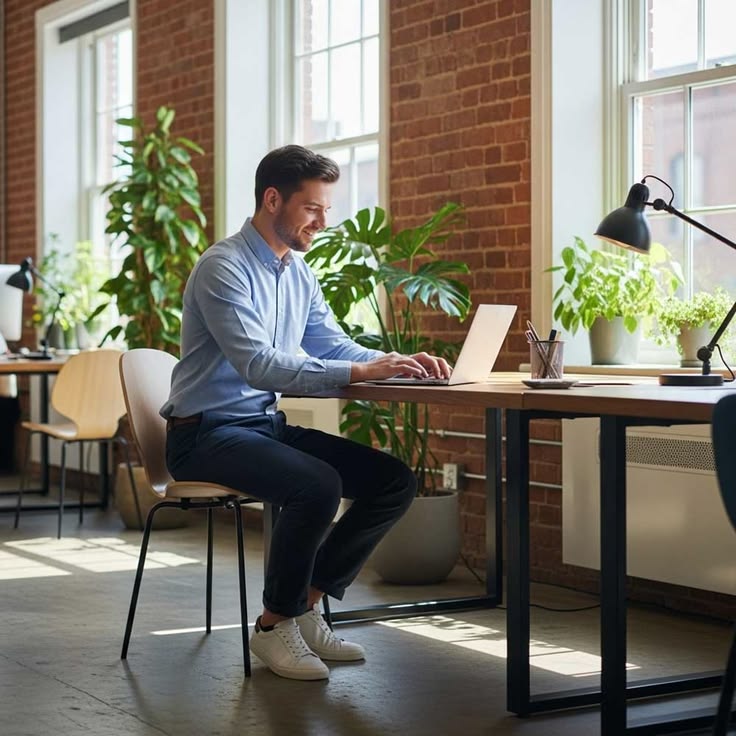
Does the space suit the person using it, from desk height to chair depth?
Are screens, light, and sound arranged so attention can settle comfortably?
Does the day include natural moments to stand, stretch, and change posture?
Is there a habit of noticing comfort and adjusting gently over time?
"Good ergonomics is less about a perfect chair and more about staying curious about how you work." A principle we share in every session
These are general ideas to consider, not requirements. Try what suits you and leave the rest.
Glancing toward something further away from time to time gives your eyes a change of distance during screen-heavy stretches.
Shifting how you sit, or standing for part of a task, keeps a single position from becoming the default for hours.
Keeping the items you use most within an easy arc reduces repeated stretching across the desk.
Linking a short pause to a recurring task, like the end of a meeting, makes movement easier to remember.
Our consultations turn these general principles into a friendly, practical conversation about your specific environment.